here are the supplies to start, plus ways I can help support you!
A few months back, I got a question from one of you who asked “what do I need to start drawing outdoors?”
I thought the answer would be an easy supply tour of different materials you could use while out in nature. But each time I went out to think about the answer, a bigger list was forming. Working from observation requires a mindset, rather than a step by step process or supply. There are a series of challenges that we need to deepen into in order to persist in making art outside.
This is why I believe that art making is a wellness practice for us to cultivate and tend to in this world that wants to take from us. Making art is how we reclaim parts of ourself back from empire.Drawing in nature invites a deeper connection with the earth and a more tender relationship with ourselves.
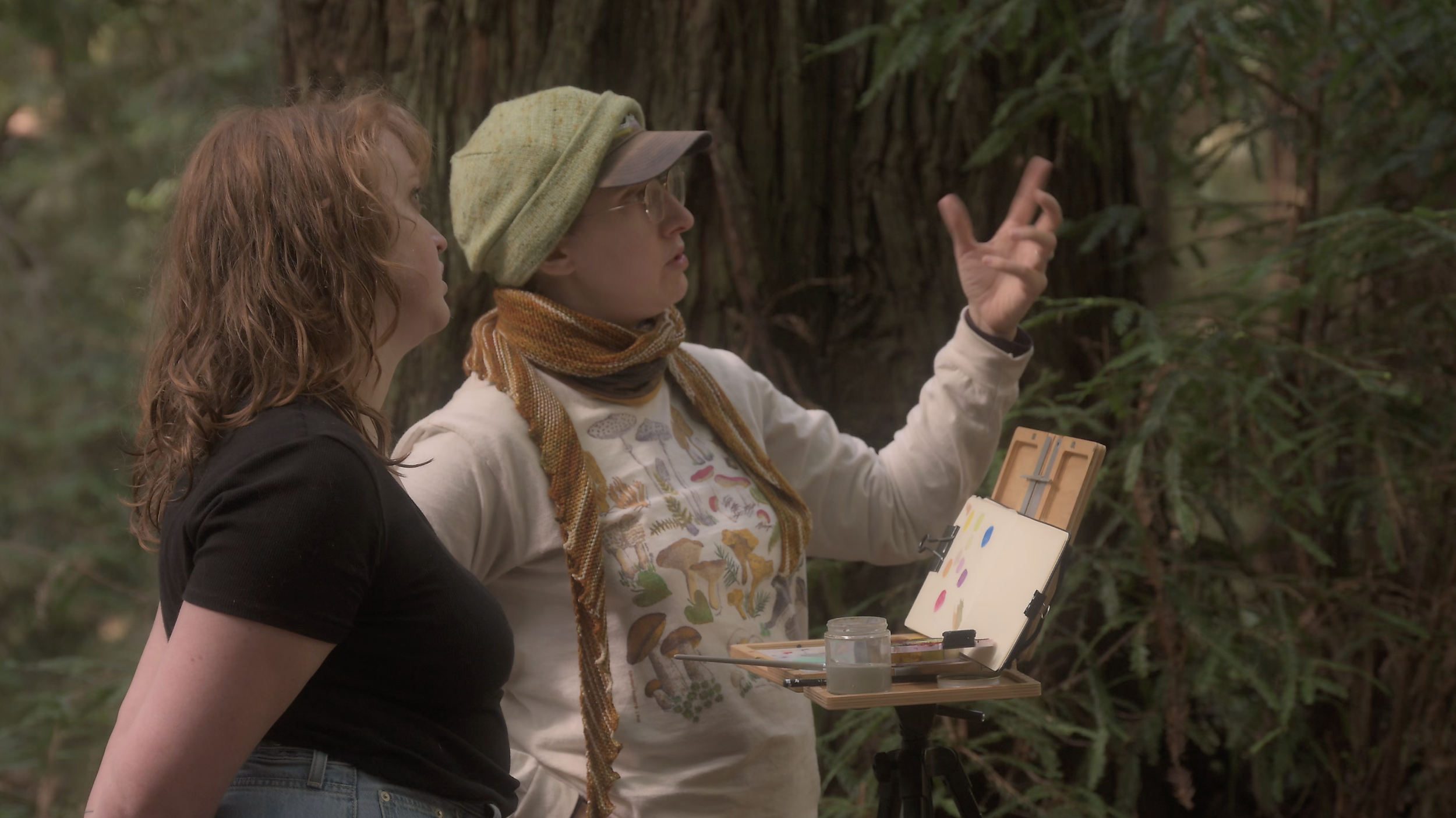
doing what I do best (teaching) in the coast redwood forest
Before we get into the dispatch today, I want to remind you that tomorrow, Saturday, March 28, 2026 my online Sketchbook Class begins at 9 AM PST!
The class blends instruction on the craft of drawing with strategies to support the long-term practice of tending to your sketchbook. If you’ve always wanted to have a drawing practice, but it feels scary, this class is for you. You can read the full syllabus here.Can’t make it to the live sessions but want to take part? Each session will be recorded if you can’t make it live and you can connect with the class via Discord.
I just returned from a camping trip on the Northern-most California Coast where I hosted an in-person creative retreat camp. My friend Hilary and I worked on color and value from observation. When I tell people I’m an adventure artist, the idea often sounds intimidating, but truly, adventure art is something I think anyone can do with some simple supplies and mindsets to guide your work.
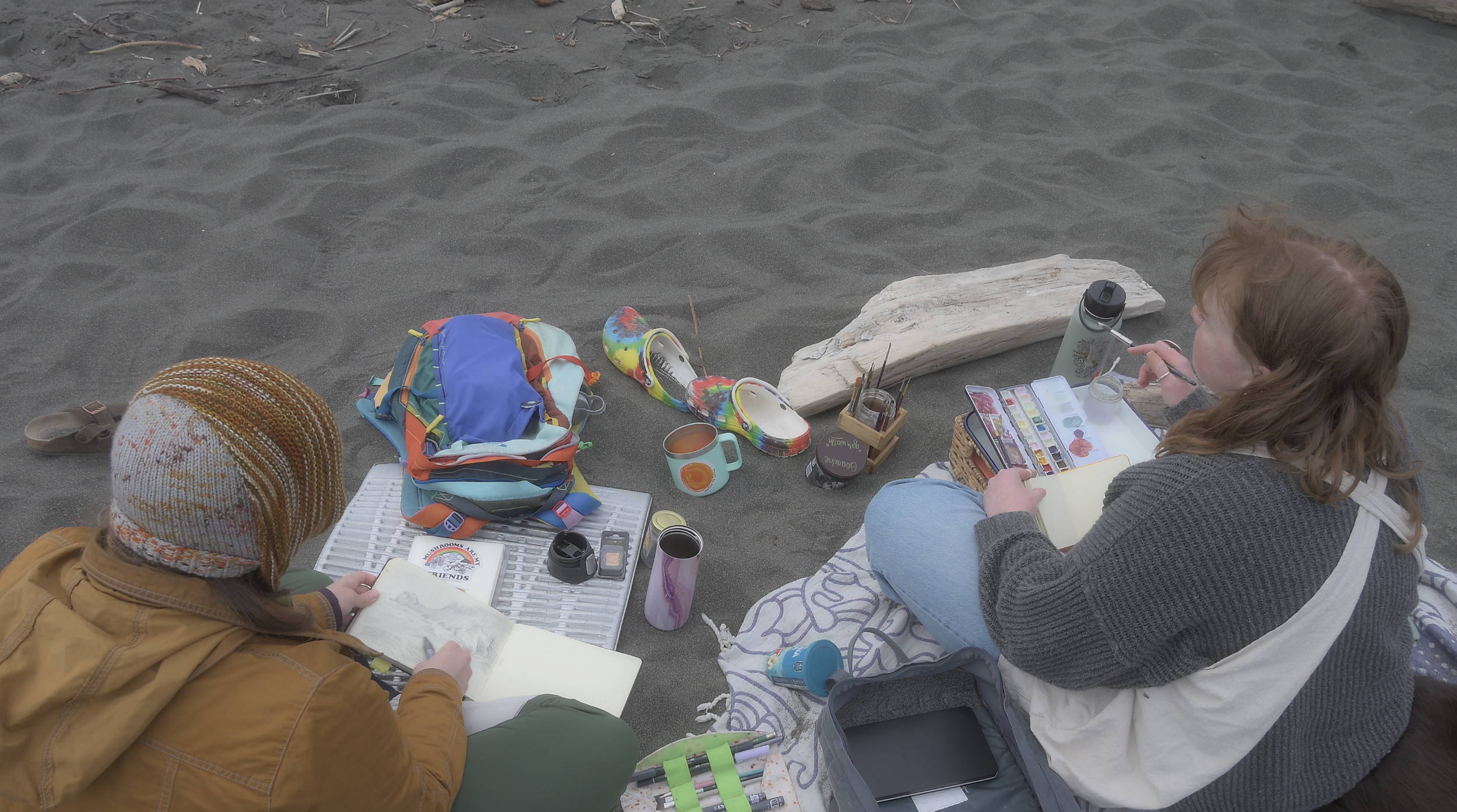
Hilary and I working on painting and drawing from observation at False Klamath Cove in Del Norte County.
Let’s start with things you don’t need:
An expensive easel and fancy tools. a blanket, camp sleep pad, or a good rock all make a good studio. I’ve worked on logs, blankets, and camp chairs for years before investing in a tripod easel. Work with what you have before you buy more materials — most artists I know have incredible collections of magical art talismans. If you’re curious about drawing I know you likely have a drawer, box, bin, and/or shelf of stuff you should use. I have a whole video on how I made an art kit for backpacking here.
A long, epic trail or backpacking trip. You don’t need to go hike up a mountain to have a good time. I have chronic pain that flared up this week again which made certain hikes impossible. A bench at the trailhead is a great studio. If you can’t hike because of the weather or your chronic pain, you can do a lot of great painting from the trunk of an SUV or in the drivers seat of any car. Long train rides and coffee shops are great for figure drawing.
You don’t need to be good at drawing. Wait, what?! Creativity itself is an act of rebellion in an era where people can just ask a silly bot to generate what is “good enough” to a corporate overlord. Your human hand has unique magic and potential for connecting more deeply to yourself and learning the way your body draws. Drawing is like handwriting, we just need to practice and cultivate our own version of it. The reason why most adults don’t draw is negative self-talk that emerges when we try things that don’t come easy to us. Sit with that one, I know it’s a doozy, but you needed to hear it.
To live in a super inspiring place. I recognize a lot of what I put out in the world is focused on my love for the land of California, which is incredible. But Missouri, Kansas, and Illinois all had so many parts of them that are taken for granted or under appreciated. Prairies and limestone cliffs of the midwest will amaze you. Pay attention to the plants. Get to know your local native birds and trees!
If you’re in the Northern Hemisphere, our worlds are coming back to life as spring arrives. Your vegetable garden or local community garden has amazing blooms you shouldn’t ignore (hi, nasturtium!) Remember, the place doesn’t need to be interesting. You need to just make it interesting to look at.To be able to draw “realistically.” Plants and rocks are wobbly and they don’t care if you get their shapes a little different than reality in your drawing. You do not need art school or years of realism-focused drawing practice to start drawing what you see. You just need start identifying core elements like shape and value, to hone your craft. You can teach yourself the basics of drawing from life through a DIY curriculum you build, or book a tutoring session with me to customize a learning system for how your brain works best. With tutoring, I can give you feedback on developing your unique art style to feel comfortable with the wobble.
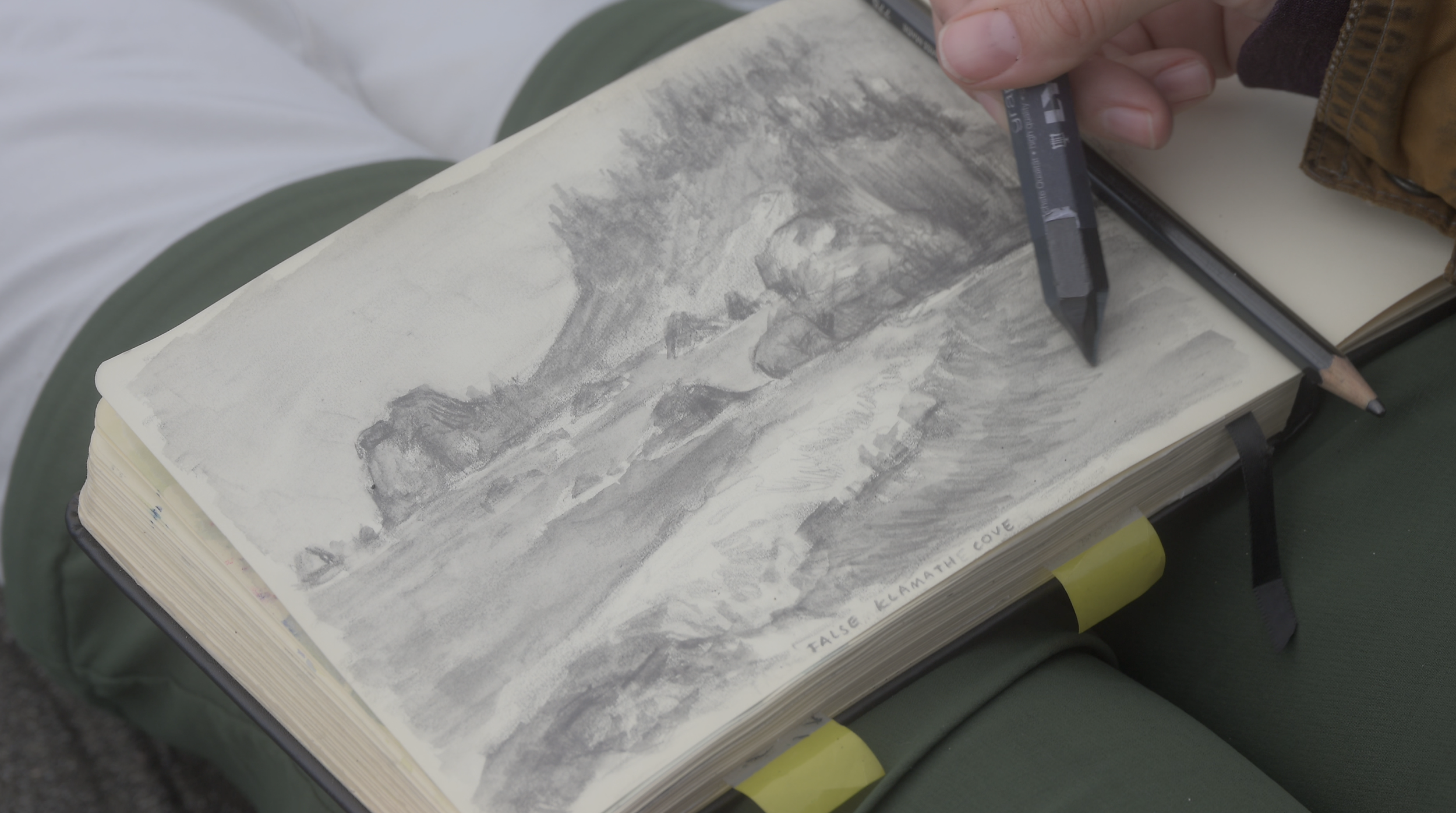
working on a drawing where i moved all the rocks around to different places in order to make a fun composition. realism is merely a foundation for being expressive with how you capture your memories of nature
Here is what is required to draw outside:
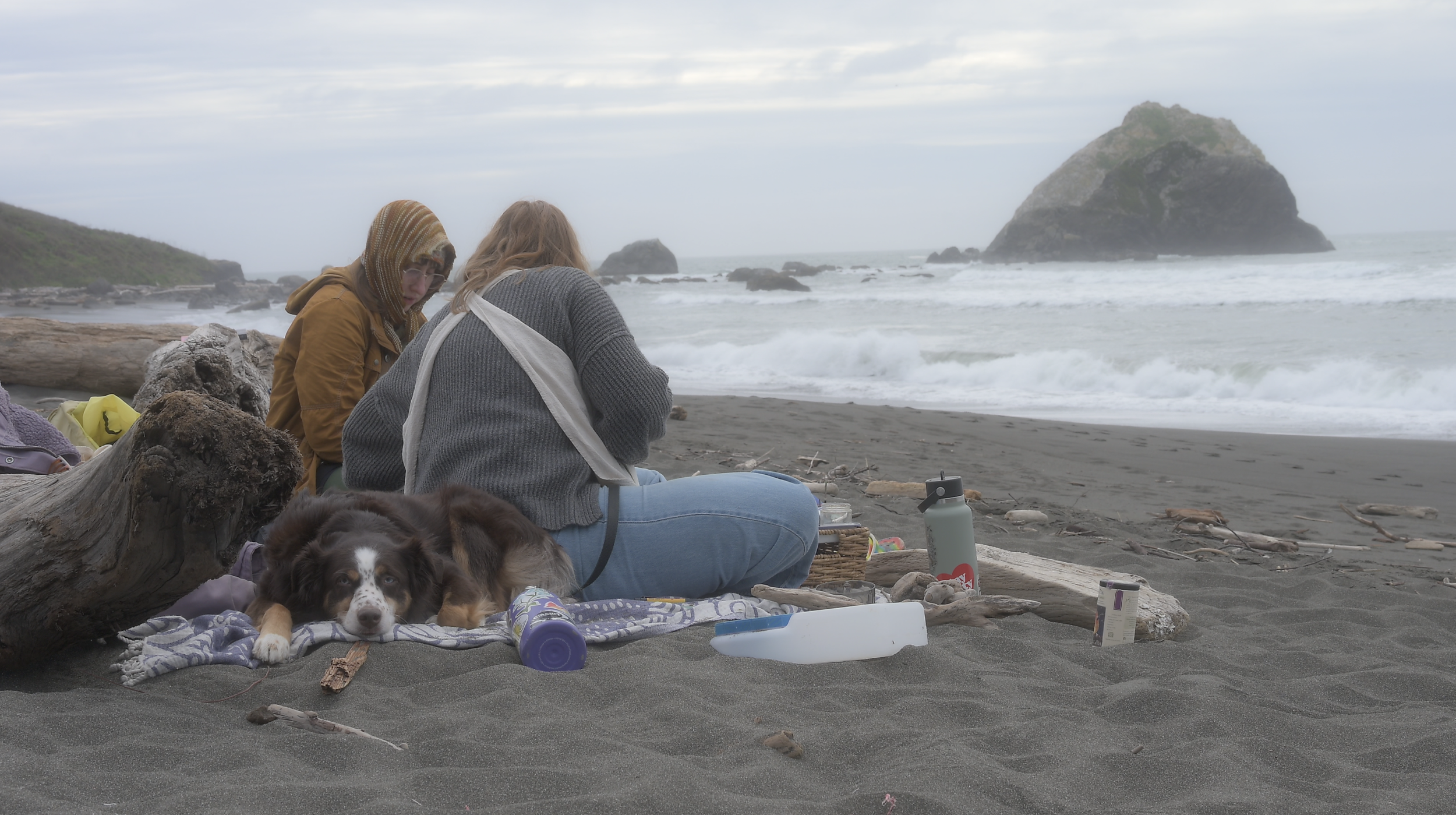
discussing patience together as the light changed yet again on the ocean rocks and cliffs
Patience - If they sold patience at Blick, I would require it as the first material for every art student. Patience opens us up to flow states, magic spaces where your imagination and what is in front of you coalesce together to make something interesting. Not all good paintings are super realistic, but all good paintings are always interesting. Patience is where we cultivate interesting. I cannot tell you how many ugly, weird, wacky rabbit holes I end up following in the process of creating a drawing or painting in nature.
All of our art has an ugly phase. Sometimes you need a break, rather than a perfect solution. This is the skill that is most essential when out in nature because the light will change, things will move, and we have to be willing to wait for the sun to come back out from behind a cloud, or be patient witnesses to other magic that emergesPatience also helps you cultivate self-trust because if you stick with it, small, little wins will emerge. Learning a new skill or craft is hard. With patience, we are required to sit with the discomfort that comes from doing hard things
A Surface - A sketchbook, some paper, a planner, or any book that feels portable and easy to keep around. I like the pocket notebooks from Talens, but you can also totally make your own with dollar store materials. If you want to build an easel or containers for your things, start by foraging for materials in your home or garage. A piece of birch plywood with some holes drilled into it to hold your brushes or paint can be a real helper. Cheap clipboards are underrated travel easels.
Curiosity - if you want to draw outdoors, you need to be curious about nature. You need to be someone who has wanted to try botany, plant ID, birding, and not be 100% terrified of every bug you see. (this comes with time!) Being curious lets you see beauty in mundane things. It lets you appreciate the things that other people overlook while fast-hiking to a destination. Curiosity helps you see shapes, forms, and the ways they relate to each other. If you need support developing curiosity, that is one of the core elements I teach in The Hikers Way.
Materials you enjoy using - What supplies do you like the look of when you use them? Please, don’t fixate on the materials other people use, they might not be for you! It’s really easy to let social media guide our supply purchases that end up leading to compare and despair. We don’t need our work to look trendy, we also shouldn’t try to make things only because they will perform well on social media.
Art-making is our handwriting. The way that you are picky about which pens you write with is the way you should be picky with art materials. Ask yourself what supplies bring you immense pleasure to hold and work with? That is what you should use. Don’t go outside to start using an entirely new material you don’t know until you understand how to clean it up, and make sure you don’t pollute your environment. Remember, leave no trace!
Spring Cleaning Activity: take inventory of your supplies, and test each of them. Which ones feel good, which ones feel meh. Can the “good” ones fit in a small pencil case you already have? Great! you’re set. Bonus: do a supply swap with an artist you know and enjoy spending time with.
Adaptation. We need to be willing to adapt because when we draw, something is going to go wrong. Outside, the conditions are fickle and will make you have to work from memory in tandem with what you currently see.
The sooner we accept that, the easier it is to move through the discomfort of art-making in nature. This is why it is type-2 fun. An activity wedon’t really enjoy in the moment, but look back on fondly. Preparing for what to do when things go wrong is key. That’s why I’m teaching sketchbooking alongside self compassion. We have to build a first-aid-kit of strategies to repair and heal what we are trying to make.
I hope these inspire you to get out this weekend and make some things or sign up for sketchbook class!
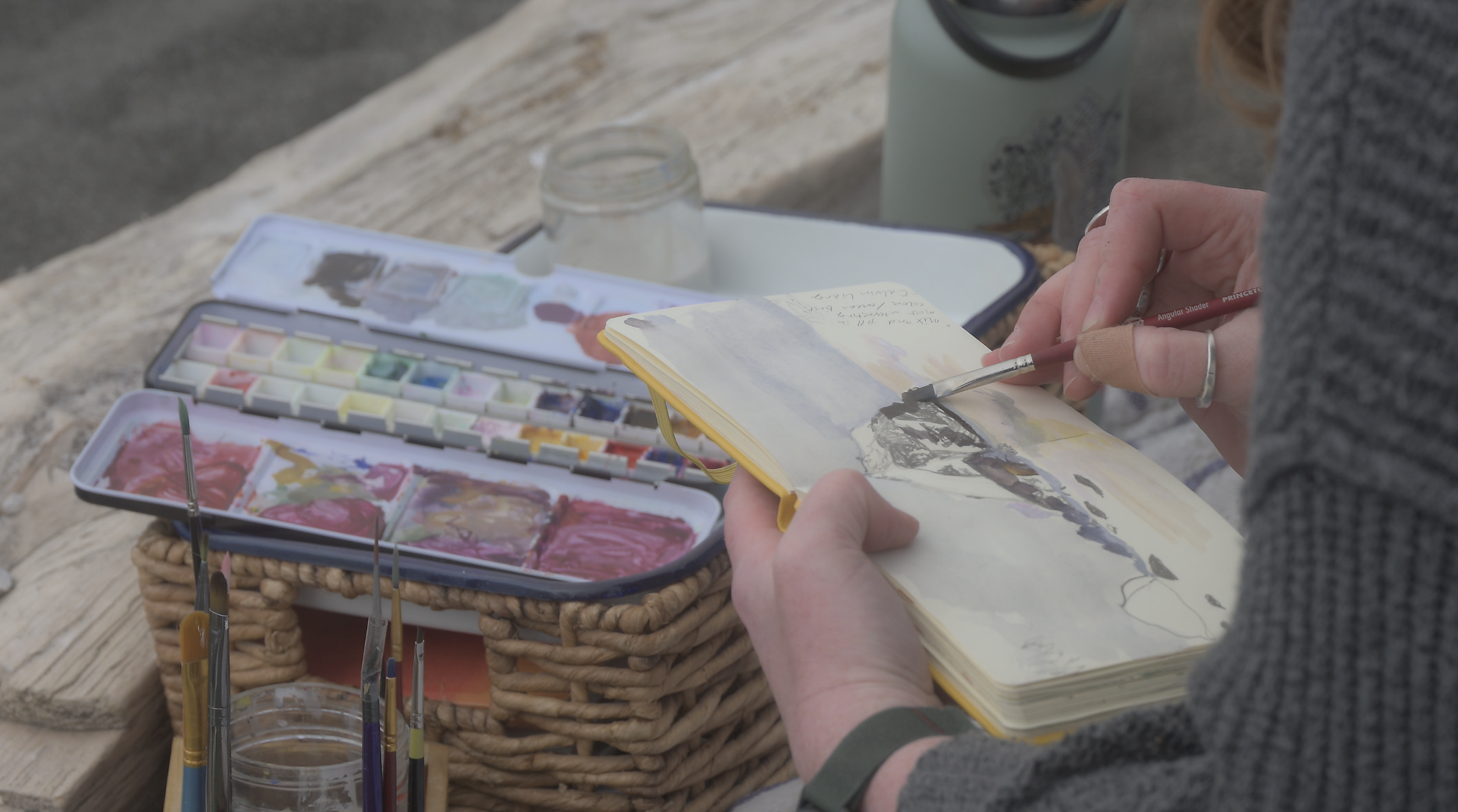
Hilary working in her sketchbook at False Klamath Cove using the gouache color techniques she learned in my Gouache & Watercolor Class
There are two more mindsets that I believe are fantastic helpers for drawing outdoors, but those will live behind a paywall for my paid subscribers on Substack.
As a reminder, I do not work with corporate sponsors in my videos or written dispatches. I take pride in being reader/viewer supported.Consider becoming a patron here OR do one of the following:
hire me to bolster your art through craft tutoring or project support
Thank you for being here, reading my writing, and supporting my craft by just being subscribed to these dispatches. The world is weird right now, but I hope that you are locating gentle paths to stay creative and finding your own ways to persistently bloom.
-Mel
