why we need to make in community and what i’m building
Before you dive in, rest assured this essay was written using 100% human intelligence. I do not use AI in my work. You can read my full AI Policy here.
We live in a world full of individualistic delusions. We internalize the shame that if someone else can do it alone, we can too. That is bootstrap propaganda. So are the messages about artists being productive and consistent all the time. The appearance of things on social media distort our reality because we see well-planned, scheduled performances as opportunities to spiral into feelings of inadequacy.
Neoliberal capitalism and social media have sold us a lie that art practice is a solitary thing. That there is a hero artist in his studio, doing nothing but tending to his genius, and getting paid handsomely. This is beyond false. [1] All working artists I know that sustain practices long term have one crucial thing in common: social supports and community.
A lack of community is the real reason that we stop. We genuinely need the creative work of others to turn to and be in conversation with. Our community is the scaffolding for long term sustainability. We need support in getting clear on our work and talking through our struggles. Going it alone in a vacuum can starve our work and leave us to suffer alone when things feel off.
It is one of many reasons why I think AI is so insidious — it tries to convince you that you can do it alone, abandoning the need for other humans with the help of Claude.[2] What if instead of turning towards chat bots, we turned toward each other once more?
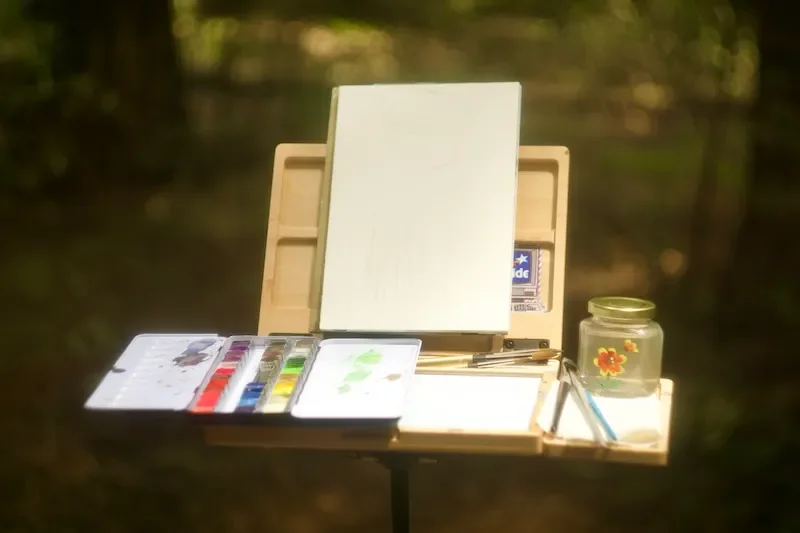
my easel in the redwoods from yesterday. I setup my easel mid-hike to chat with our out-of-town guests while I painted.
Isolation and community abandonment is common in US Culture. It often leads to us giving up on the creative work and the imaginative practices that make life worth living.
I know that cultivating community is hard work and it’s fragile. When I fell out with my mentor in 2018 [3], I lost the community I built over nine years. Our fallout was messy and hostile. I fell out of touch with a large swath of fellow artists because I suddenly felt unsafe and anxious going to gallery openings or hosting open studios. That blow to community was compounded when the studio space I started renting in 2014 closed abruptly. This led me to giving away all of my prepared wood panels, brushes, and oil paint. I committed to swear off the medium for life.
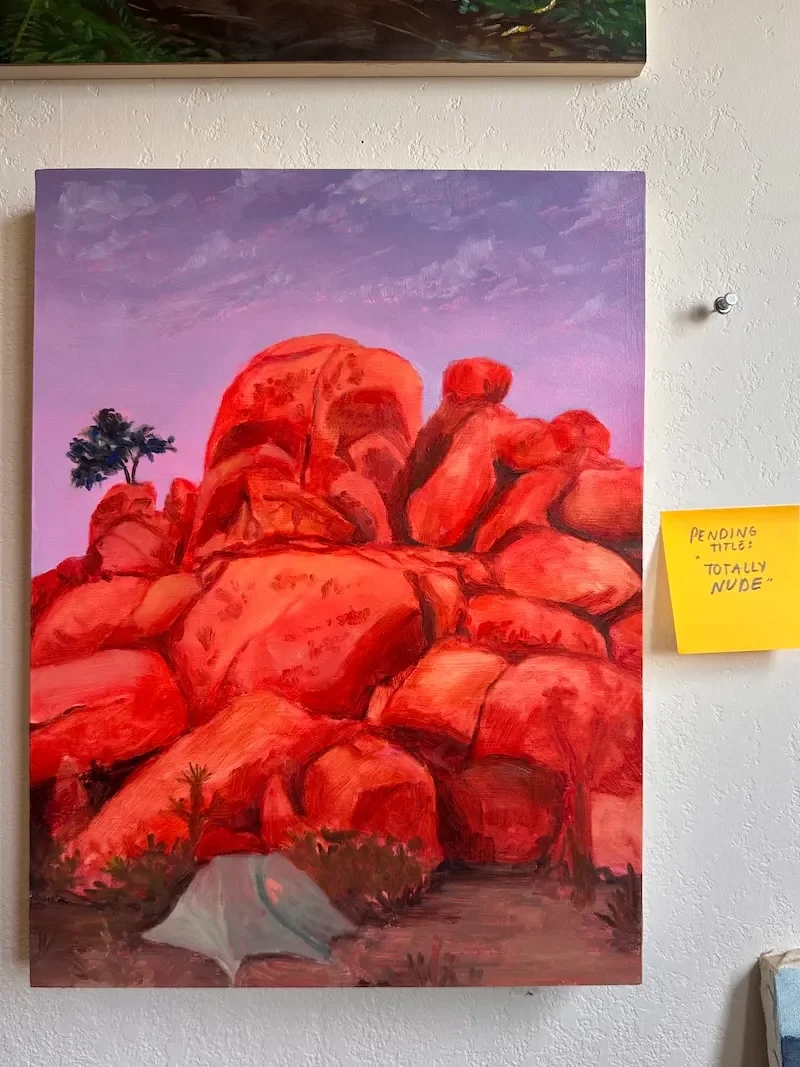
an oil painting on my wall currently inspired by both Georgia O’Keeffe and Hieronymus Bosch. I absolutely love oil paint and I’m devastated by the period in which I abandoned it.
Clearly, that was a mistake, but the loss of social support caused me to question the purpose of continuing with art all together. I could tell there was no way to make a real living with the routes I was taught in art school. I felt that I no longer belonged in the Art World, and my closest friends— fellow artists with MFAs and teaching jobs — watched me abandon academia for a life in corporate. Even though I was teaching art at Apple, I felt like a sell out. I was abandoning my craft to follow a different normalized myth of leaving things behind for your “career.”
I lost touch with so many incredible people, and moved 1,800+ miles away to build an entirely new life. In California, I was surrounded by fellow tech workers, folks trying to climb the corporate ladder. Almost no one around me had an independent creative practice, aside from one mentor, who never abandoned her practice of dance. It was this mentor, a person who had been working for Apple since before the release of the iPhone, who encouraged me to quit in 2023, to pursue my art and build a creative retreat center.
But upon walking out the door of Apple, there was a huge chasm between me and this dream. I had to start over and build creative community from scratch, on the internet.
When I quit working for Apple back in 2023, I had two goals:
Work on my art and share it with others in hopes of building a new community outside of the art world, on the internet.
I wanted to build a real alternative to art school, a hybrid between retreat and learning. That roots into compassion and mutuality rather than competition.
That first part happened via Discord. I opened a free channel to sign up and met folks who resonated with my vlogs, essays, and writing online. This group came together slowly, from 15 people in 2023, to over 350 today. People who heard my call for creative community, that wanted a place for sharing and communicating about their work outside of the art world and the expectations of art school.
In moments of big doubt on my path, the Persistent Bloom Discord is a place that I turn to as well, allowing my practice to grow and bloom into something sustainable long term. This community kept me writing, making videos, and making my work in tandem with them. I’ve filled 4 sketchbooks alongside this group while hosting occasional live Creativity Clubs in the space. The memes are great, the people genuinely care about each other, and we all collectively dislike generative AI.
The folks in this space are amazing at supporting each others’ practices through cycles of creation and integration. However, in auditing my personal energy and capacity this year, I realize I could no longer make joining the Discord into a free offer for anyone on the internet.
I consulted with the group in a town hall and made the tough choice to put joining behind a small paywall. It’s now $15 once or $3/month to join this group and sustain the work we have been doing. This money helps pay to keep the server running ($150/yr) and pay for the labor of stewarding it. ($?$?/year)
The best tool for making this happen on the internet was Patreon. Once I had the paywall in place, I decided to expand on what I could do with the platform. What else could I offer? Was it finally time to start making the alternative art school I had been dreaming up for the last three years? The answer was yes from everyone I asked.
Someday, I want the Persistent Bloom retreat center to be on land. I want to host people, teach them craft, cook them meals while they make their work, guide folks in group nature time to supplement inspiration in their practice. I want to live in a solarpunk commune with other artists and makers in alignment with the land and take part in experiments to live for a future we believe in. This idea is currently financially far off, and I have to start scaffolding the supports necessary to make this work happen.
Substack has been the primary platform where folks have chosen to support me with monthly or yearly memberships. It’s also the place where many of you have signed up for my classes, booked retreats, scheduled tutoring calls, and overall started to trust me as an instructor. I plan to stay writing here because I genuinely enjoy it and have loved building relationships and solidarity with other writers, despite having quite a values misalignment with the platform owners.
Persistent Bloom is taking on a new shape through Group Tutoring on Patreon
I have been building this retreat center alternative art school with each class I offer, trying to build sustainable methods for keeping in touch with students. This is why every single class I teach has a unique Discord channel where students have the option to stay in touch, sharing their work, or build relationships with the larger community of artists that exist there.
When it comes to personalized lessons and feedback, this has happened only through 1-on-1 with craft tutoring, supporting individual artists with their skills and challenges. I absolutely love this work. One of my clients just passed this incredible milestone where he can now draw the faces of characters from his imagination alone.
Being around other people in the studio, making things wildly different than my own, was essential. We were all drawing the figure in class in completely different ways. Some on laptops, others with oils, charcoal, and some folks in clay. The ways our practices would commingle, influence each other, and push each other was essential. I needed to be pushed — not by my professors, but by my peers, to try new techniques, media, or research different topics.
My professors often taught through authority and enforced an intense rigor in alignment with what Art Forum [4] saw as “valuable praxis” [5] But my peers [6] and I taught each other through trust. In my peers, I felt more permission to experiment because I wasn’t being expected to perform excellence or contort my work to a form I didn’t relate to.
I want to help cultivate this magic of making art in community at the speed of trust, with depth.
The goal with Group Tutoring is to encourage folks from all different media to show up and support one another in entering bloom cycles, while offering the thing that self-help books and learning on our own can’t — access to one another. To turn to each other in cycles of rest and integration in order to stave off stagnation.
I want to do this work, what I feel deeply called to: the work of creative education that supports the both/and life of living as an artist. That’s what Group Tutoring is for.
It’s $19/month, and I’m capping the container at 15 of us— to meet once a month, request technique demos, and give tender feedback to one another. This is for folks who want to invest in their work, and the work of other artists, right now.
Who is this for?
This is for folks who want to invest in their work, and the work of other artists.
This is for folks trying to strengthen their practice or become writers, musicians, painters, filmmakers, animators, photographers, knitters, quilters, and any other creative human who would benefit from having a multidisciplinary group to support their work long-term.
This is for folks who want to maintain a stance of sobriety in regards to AI and their creative work.
It’s also for folks who want direct feedback on what they are making that is constructive, supportive, and helpful.
This feedback will come from peers, myself, and my main collaborator, my spouse Wes Jackson. He is the primary editor of this newsletter, the camera person behind 80% of my videos, and a fucking brilliant artist and musician. [7] Him joining me to support the Patreon is something I am deeply excited for.
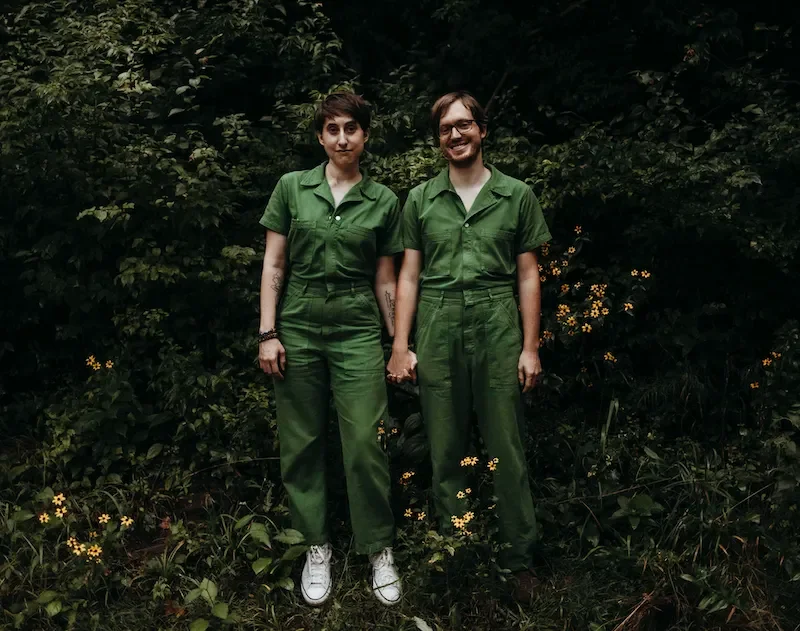
Wes and I together in the woods of Missouri before we relocated to California. Photo by Juliana Noelle Jumper
Who is this not for?
Group tutoring is not for folks who want another self-guided or individualistic thing. I have those offers already, and you can see them all here.
With group tutoring, you want to be ready to show up for yourself and others. If you want 1-on-1 support, I do that work, but it costs $70/session for a reason.
The Group Tutoring effort is also not for folks who want advice on making art as a means for running a business. There are other people who do this work!
In this space we are tuning into craft and balancing how this work can be supported by the lives we have. We will discuss what it means to balance your art work with a job and the responsibilities of working-class life like family care, housework, and feeding ourselves.
Finally, group tutoring is not for folks who aren’t ready to receive feedback on their work. If your practice still feels too new and squishy, let’s work together 1-on-1 first.
As facilitators, we do not use or condone AI use in creative practice. We ask that you not use AI as a tool in the work you show, present, or get feedback on in this space. We focus here on human-generated content and process over product.
Ok so… What are the differences between Patreon and Substack?
I made a whole website that really details the differences and benefits of each platform. I plan to stay on both, offering different things to each audience. I’ll keep writing here, offering bonus creative prompts, discounts, and my adventure art photo reference library to folks who are paying to support me in this space!
Paid members on Substack ($5) and on Patreon ($6) will get access to semi-monthly Live Creativity Club Zoom events. Folks who simply join the Discord ($3) will have access to seasonal live events when energy and time allows me to offer them.
If this generally feels a bit confusing, leave me a question as a comment below. You can also read the piece I wrote last week that really clarifies what Substack is and means for me right now.
the clarity of a manifesto & my 100th post
I also want to share some tips with you for building community on your own.
While I would love for you to join the Group Tutoring cohort, l know not everyone can afford to invest in their practice right now. Maybe you will later this year! There are methods to attempt building something on your own. Just know this takes real WORK and TIME. Be willing to be patient, try things, and be open to starting over if it doesn’t go well.
Start by locating existing events in your area for a particular craft or practice you work on. The internet is still good for finding local meetups, but honestly going to a shop or event space that supports your creative work will likely lead to better events. This is how I found my knitting group.
Here are the steps build IRL community in your town, big or small:
Locate three events in your area within your chosen craft or interest. Look into bookstores, craft shops, venues, and libraries.
Decide and schedule which events you’ll attend. Do not flake on yourself!Put it in your planner/calendar and do not say yes to other things instead.
Introduce yourself to at least 3 people at each event (I’m gay and feel safer with other queer people so look for the queerest possible people in a room. Mullets. Enamel Pins. Pay attention to shoes. Doc martens and Blundstones are usually a safe bet for a safe person for me.)
If you vibe with these people, ask about other things going on in the community. How can you get on a list to know about them? Is there an account you need to follow?
Ask these folks what they make and what they like about the community
If you liked the vibe at the event, get on the mailing list for the business or venue and make a commitment to go to at least one thing per month. Request time off work in advance if you have to.
Doing this community building work is intimidating, I know. Especially if you are someone like me who has social anxiety and really struggles to feel safe around strangers. I have always felt a little more safe on the internet than in person.
I also recognize that the thing that made this community feel more possible was the fact that I went to art school. The act of community building was baked in. This was a privilege I want to acknowledge fully, as most communities operate at the speed of trust and it can feel really insular — especially around other visual artists — to find an in that feels safe, comfortable, and welcoming.
Keep persisting in this practice of building solidarity with other artists, even if it feels uncomfortable and weird. If you decide you’re ready for support, just know that Group Tutoring is there for getting guidance from a seasoned educator and peers with an investment to do this work alongside you.
Thanks for reading. Until next time, stay creative, and find your own ways to persistently bloom.
This myth of solitary practice came out of the era when the WPA and the NEA were giving real funding to artists, the government paying them to live and make work. Which is why all artists should be advocating for UBI in solidarity with working class people to make studio practice essential and accessible for all humans as an act of resistance.
So that your artistic output can be endlessly surveilled by a corporate overlord in bed with Palantir? If you don’t already know who Alex Karp is, boy howdy buckle up, he is the CEO of Palantir, which uses Claude to power it’s AI weapons and surveillance systems and also, he is a monster.
I plan to tell a more in-depth story behind this split in an essay for paid supporters later this year.
a magazine known for art reviews, giant gallery show ads, and an overall barometer of taste in the traditional art world, despite the work celebrated in it often being quite opaque.
if you’re unfamiliar, praxis (Ancient Greek) is a pretentious and theoretical way of saying the word practice. easy to throw around if you’ve read a bunch of Marx and Aristotle but a great example of the art world making things more complicated than they ever need to be
I don’t want to sound too utopian here… When I say peers I mean a group of roughly 10 people in my department that I got along with. There were plenty of bullies and trolls in art school. But most of those jerks have stopped making work now.
You can check out his work here. You can also hear the song we wrote together about screen addiction, here.
